Initiated in 2017, ongoing.
Marble, polyamide, machine learning algorithms, custom software, original dataset, multichannel video installation.
Machine learning research collaborator: Artem Konevskikh.
The series comprises sculptures, video installations, texts and a film essay that inquire into reverse archaeology via AI models and datasets of 3D scans of documents relating to cultural and natural history. Aimed at reconstructing missing fragments within sculptures of classical antiquity, fossils and other paleontological and cultural objects, the computational knowledge models are exercised in speculative, object-oriented historicism through derived, never-before-existent yet algorithmically 'accurate' quasi-documents of synthetic histories.
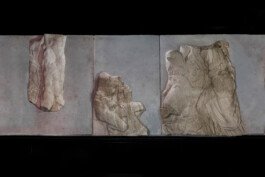
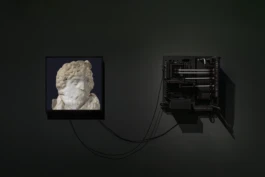
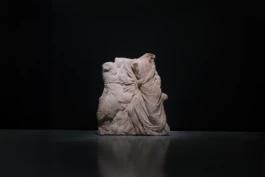
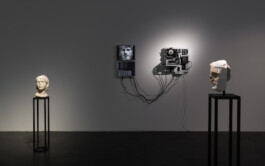
Content Aware Studies series inquires into the aesthetic, philosophical, and historiographical outcomes of computational and particularly in relation to modern generative AI models, reconstruction and generative reinterpretation of the objects of art of classical antiquity and in particular to fill the voids of the missing fragments. The automated algorithmic training is performed on the manually assembled dataset over thousands of 3D scans of friezes and sculptures of the era. The series concerns the prospects of methods involving data, ML, AI, and other computational automations turning into semi- and quasi-archeological knowledge productions when performed to augment historical and cultural studies in the era of ubiquitous planetary-scale computation. Some of these algorithmic outputs are then turned into new machine-fabricated sculptures uncanny in their algorithmic integrity. They render the work of synthetic agency that lends faithful authenticity to the forms, while also producing eerie errors and algorithmically bizarre normalisations of forms previously standardised and regulated by the canon of Hellenistic and Roman art. These speculative forms of restoration, museology, and historiography provide a case study for critical examination of possibly misleading trajectories of algorithmically augmented research and knowledge production, poisoned by epistemic focal biases occurring at the level of software architecture of radical complexity. Preoccupied with biases, misleading guises, quasi-authenticities, and mixed-up entanglements of material and informational domains, it seeks to examine epistemological issues. The series questions: what epistemics do such methodologies hold by uncovering deeper and sharply unsuspected new knowledge or instead masking unacknowledged biases? In the optics of a non-human agency of the AI-investigator, what of our historical knowledge and interpretation encoded into the datasets will survive this digital digestion? How are historical narratives, documents, their meaning, and function perverted when their analysis has been outsourced to machine vision and cognition? What changes can we anticipate in historical knowledge and documentation during the era of the information overproduction epidemic and generative reality modeling?
Hashterms
A form of parahistorical investigative practice in which gaps in our knowledge of the past are studied and filled in using machine learning and generative AI techniques involving historical archive datasets.
Historical findings and narratives resulting from reverse archaeology and other algorithmic methodologies.
A speculative concept describing an emergent aesthetic system that arises from autonomous processes rather than from direct human intention. The term combines auto- (self, autonomous) with aesthetics, suggesting forms of perception, judgment, or sensibility generated by machines, algorithms, or self-organizing systems.
Refers to the architecture of the entangled cognitive infrastructures involving algorithms and the software designs of AI models, automated data streams, and the core platforms and libraries for machine learning, as well as the hardware on which they operate, i.e. data centres, submarine cable networks, and GPU chip designs, etc.


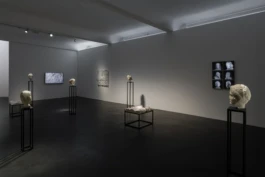
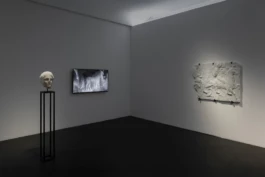
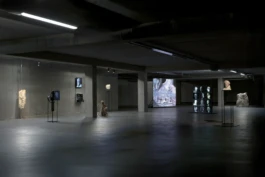
Content Aware Studies, solo show, Alexander Levy, Berlin, DEU, 2019.


NTAA’22, New Technological Art Award, group show, Zebrastraat Ghent, BEL, 2021.
Content Aware Studies (CAS)series takes shape in vast custom built datasets, custom developed machine learning technics, models, sculptural objects, moving image works, films and essays. It inquires how the use of generative computing and AI technics in historical studies renders epistemic questions in relation to synthetic contamination and research ethics. Inspired by examples of confusing para-scientific interventions such as AI-based Voynich Manuscript decryptions amongst others, the CAS series exercises this inquiry through production of material objects as synthetic documents of machine-rendered histories.
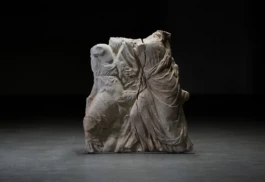
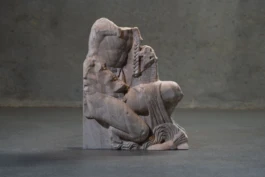
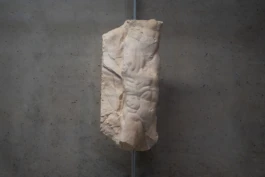
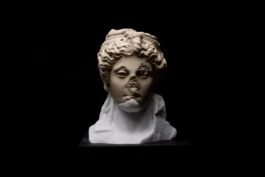
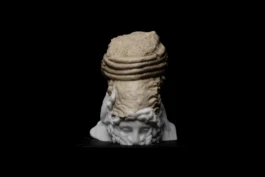
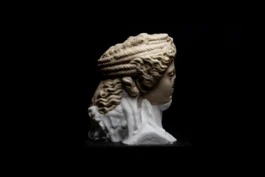
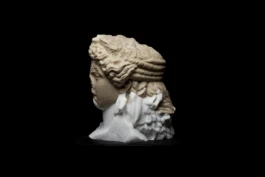
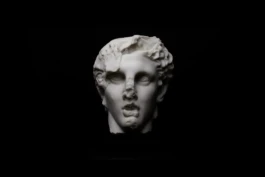
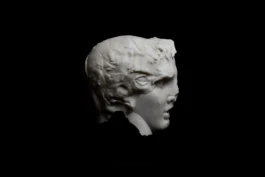
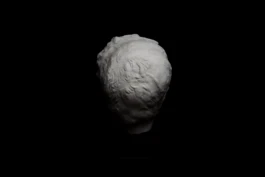
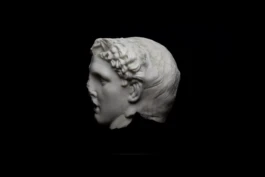
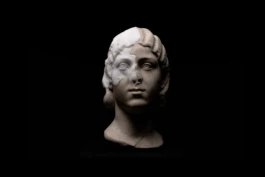
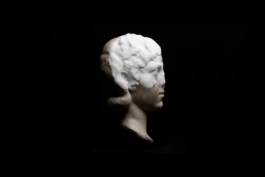
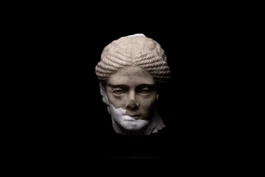
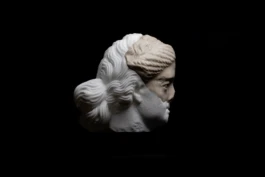
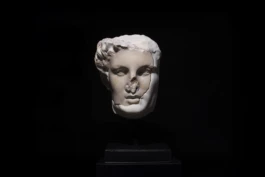
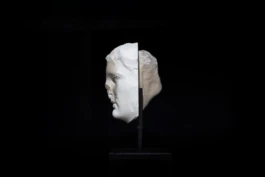
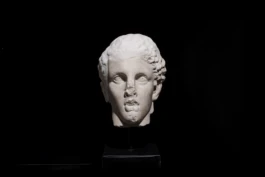
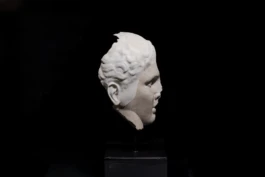
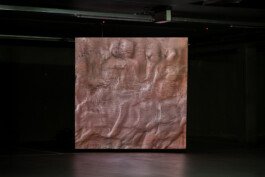
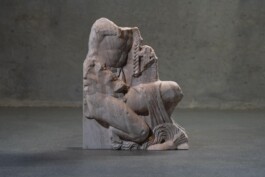
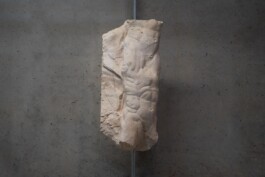
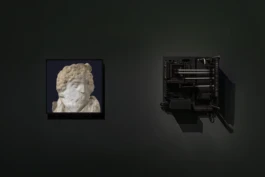
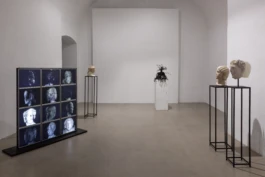
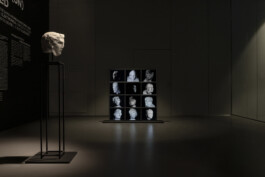
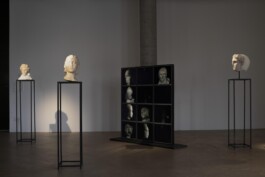
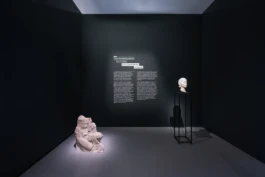
The objects from the initial iteration of the CAS series came through methodologies developed with data scientists and based on training artificial neural networks aiming to replenish lost fragments of sculptures, friezes and other objects of classical antiquity as well as to generate never-before-existing, yet algorithmically genuine, objects of that era. The research examined outputs of advanced AI models trained on datasets consisting of thousands of 3D scans of classical sculptures from renowned international museum collections. The models generated by the algorithm were then 3D-printed in various synthetic materials, filling the voids in eroded and damaged marble sculptures. Some of these algorithmic outputs were turned into entirely new stone sculptures carved by machines. Uncanny in their algorithmic integrity, they posed questions about how they relate to genuine objects of classical antiquity, given indistinguishable materiality. They render the work of a synthetic agency that lends faithful authenticity to the forms, while also producing bizarre errors and algorithmic normalisation of forms previously standardised and regulated by the canon of Hellenistic and Roman art.


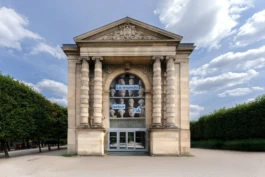
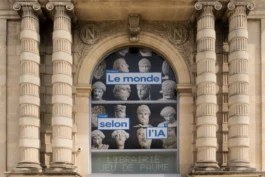
'The World through Ai', group show, Jeu De Paume, Paris FRA, 2025.


Various shows 2017-2021
In its next iteration, constituting this proposal, the CAS series will shift towards challenging previously established AI methodologies against data from prehistoric & geologic time archives, including first stone tools, writing systems, paleontological archives of fossilised plants, organisms and other documents of natural history. It is expected to operate on datasets primarily comprised of findings archived and documented in natural history museum collections, from which the objects of fictional synthetic histories are to derive as a result. The techniques involved in the production of these objects are to include artificial maturation via newly established methods of sediment filtration, thus achieving 'synthetic' fossils not just visually, but also microscopically.
These speculative forms of restoration, museology and historiography mean to provide a case study for critical examination of misleading trajectories in knowledge production and future historic inquiries occuring at the level of radically complex software architectures. Preoccupied with biases, misleading guises, quasi-epmiricism, and mixed-up entanglements of material & informational domains, it seeks to examine epistemological issues of computationally augmented studies. The series questions: what epistemics do such methodologies hold by uncovering deeper and sharply unsuspected new knowledge or instead masking unacknowledged biases? What changes can we anticipate in historical knowledge and documentation during the era of the generative infollution and synthetic historiography?


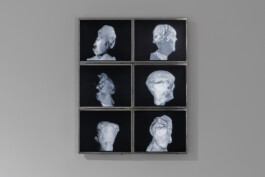
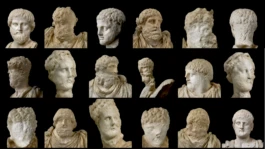
Top Left:
Title: CAS XVI Caryatid Portrait, 2019
Marble, Polyamide, Dim. 21 x 17 x 25,5 cm
Top Bottom:
Title: CAS VIII Female Portrait 2019
Engineered Stone, Polyamide, Dim. 26 x 20 x 23 cm
Top Mid:
Title: CAS XX Augmented Hercules Portrait, 2019
Marble, Polyamide, Dim. 21 x 17 x 25,5 cm
Bottom Mid:
Title: CAS XI Hellenistic Ruler Portrait , 2018
Marble, Polyamide, Dim. 26 x 20 x 17,5 cm
Top right:
Title: CAS VII Julia Mamea Portrait , 2019
Marble, Polyamide, Dim. 33 x 19 x 19 cm
Bottom right:
Title: CAS XII Colossal Hercules Portrait, 2018
Marble, Polyamide, Dim. 29 x 22,5 x 20,5 cm

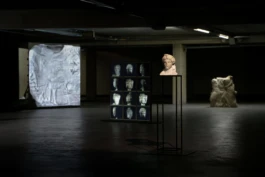
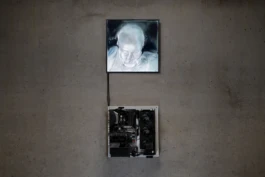
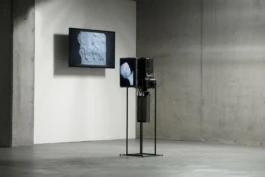
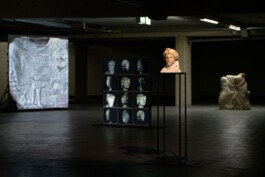
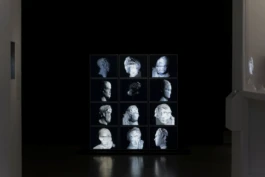
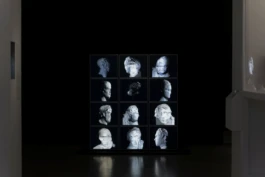
CAS IV Deep Portrait Studies (12 ch. version) at The World through Ai, Jeu De Paume, Paris FRA, 2025.
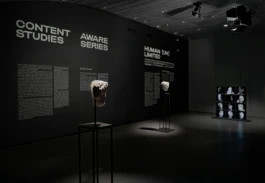
CAS IV Deep Portrait Studies (12 ch. version) at Human (un)limited, Ars Electronica Export, 2019
Date of creation: 2019
Technique: 12 screens, metal frame, machine learning algorithms, unique real-world dataset;
Dimensions: 125 x 110 x 20 cm.
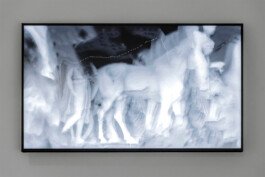
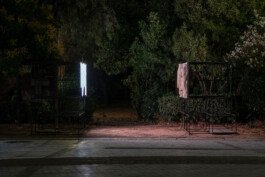
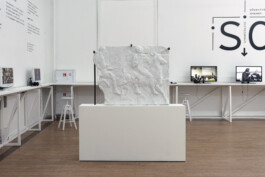
Technique: Generated using the StyleGAN generative adversarial network, based on scans of the 16th-century Voynich Manuscript (Beinecke Rare Book and Manuscript Library, Yale University);
Duration: 5’00”.
Technique: Purpose-built software, open source, generative AI models, custom-assembled, natural and synthetic datasets;
Duration: 20'00".
In its next iteration, constituting this proposal, the CAS series will shift towards challenging previously established AI methodologies against data from prehistoric and geologic time archives, including first stone tools, writing systems, paleontological archives of fossilised plants, organisms and other documents of natural history. It is expected to operate on datasets primarily comprised of findings archived and documented in natural history museum collections, from which the objects of fictional synthetic histories are to derive as a result. The techniques involved in the production of these objects are to include artificial maturation via newly established methods of sediment filtration, thus achieving 'synthetic' fossils not just visually, but also microscopically.

‘Museum of Synthetic Histories’ Essay Book Cover.
A series of essays on Synthetic Histories, Hylomorphism and Materiality, and Predispositions by Design in which the work Content Aware Studies is at the centre as a case study for the proposed critique of AI-driven methodology in historiography.
Links to downloadable PDFs:
2022 ‘Museum of Synthetic Histories’ - E. Kraft, E. Kormilitsyna | Published by BCS. Learning and Development Ltd. Proceedings of POM Conference, UDK Berlin 2021

'Content Aware and Other Case-Studies' Essay Book Cover.
2021 ‘On Content Aware and Other Case-Studies’ - E. Kraft, E. Kormilitsyna | Published by City University of Hong Kong, HKG
Initiated in 2017, ongoing.
Marble, polyamide, machine learning algorithms, custom software, original dataset, multichannel video installation.
The series comprises sculptures, video installations, texts and a film essay that inquire into reverse archaeology via AI models and datasets of 3D scans of documents relating to cultural and natural history. Aimed at reconstructing missing fragments within sculptures of classical antiquity, fossils and other paleontological and cultural objects, the computational knowledge models are exercised in speculative, object-oriented historicism through derived, never-before-existent yet algorithmically 'accurate' quasi-documents of synthetic histories.
Content Aware Studies series inquires into the aesthetic, philosophical, and historiographical outcomes of computational and particularly in relation to modern generative AI models, reconstruction and generative reinterpretation of the objects of art of classical antiquity and in particular to fill the voids of the missing fragments. The automated algorithmic training is performed on the manually assembled dataset over thousands of 3D scans of friezes and sculptures of the era. The series concerns the prospects of methods involving data, ML, AI, and other computational automations turning into semi- and quasi-archeological knowledge productions when performed to augment historical and cultural studies in the era of ubiquitous planetary-scale computation. Some of these algorithmic outputs are then turned into new machine-fabricated sculptures uncanny in their algorithmic integrity. They render the work of synthetic agency that lends faithful authenticity to the forms, while also producing eerie errors and algorithmically bizarre normalisations of forms previously standardised and regulated by the canon of Hellenistic and Roman art. These speculative forms of restoration, museology, and historiography provide a case study for critical examination of possibly misleading trajectories of algorithmically augmented research and knowledge production, poisoned by epistemic focal biases occurring at the level of software architecture of radical complexity. Preoccupied with biases, misleading guises, quasi-authenticities, and mixed-up entanglements of material and informational domains, it seeks to examine epistemological issues. The series questions: what epistemics do such methodologies hold by uncovering deeper and sharply unsuspected new knowledge or instead masking unacknowledged biases? In the optics of a non-human agency of the AI-investigator, what of our historical knowledge and interpretation encoded into the datasets will survive this digital digestion? How are historical narratives, documents, their meaning, and function perverted when their analysis has been outsourced to machine vision and cognition? What changes can we anticipate in historical knowledge and documentation during the era of the information overproduction epidemic and generative reality modeling?
A series of essays on Synthetic Histories, Hylomorphism and Materiality, and Predispositions by Design in which the work Content Aware Studies is at the centre as a case study for the proposed critique of AI-driven methodology in historiography.
Links to downloadable PDFs:
2022 ‘Museum of Synthetic Histories’ - E. Kraft, E. Kormilitsyna | Published by BCS. Learning and Development Ltd. Proceedings of POM Conference, UDK Berlin 2021

‘Museum of Synthetic Histories’ Essay Book Cover.
Ikejiri, Setagaya, Tokyo, Japan
Neubau, Vienna, Austria
E. G. Kraft – artist-researcher, founder
Anna Kraft – researcher, director
Ikejiri, Setagaya, Tokyo, Japan
Neubau, Vienna, Austria
mail[at]kraft.studio
E. G. Kraft – artist-researcher, founder
Anna Kraft – researcher, director
Content Aware Studies, 2017-2025
The New Color, 2011-2018
1 & ∞ ⑁ One & Infinite Chairs, 2023
Hashd0x. Proof of War, 2022
Decentralised Embargo, 2022
Ais Kiss, 2017
Chinese Ink, 2018
PropaGAN, 2022
URL Stone, 2015
The Link, 2015
Twelve Nodes, 2019
Scatterchive
I Print, Therefore I Am, 2014
Kickback, 2014
Unfolding, 2011
The Moment, The Past, 2014