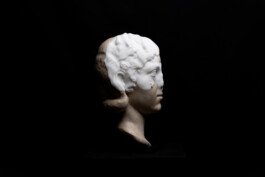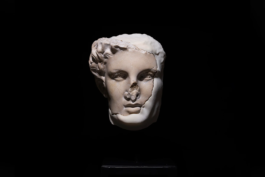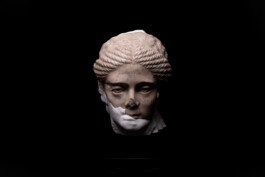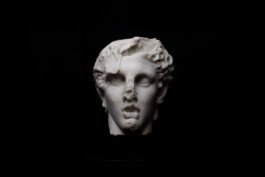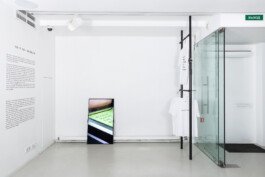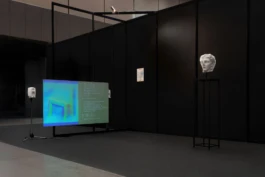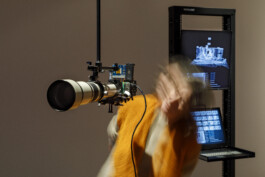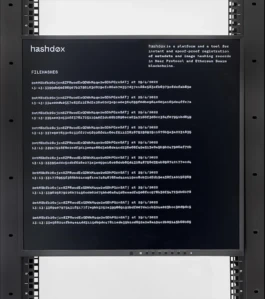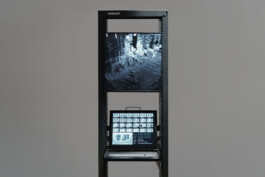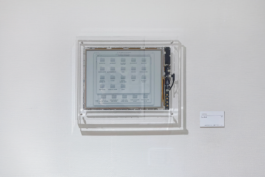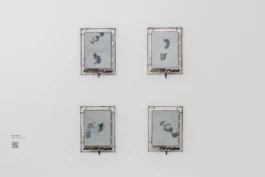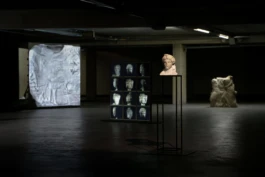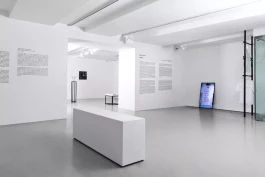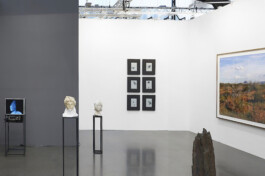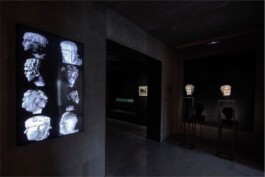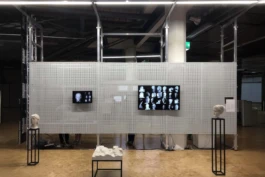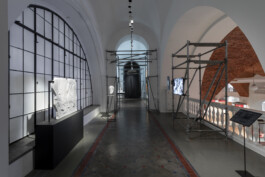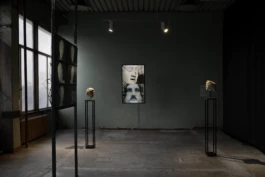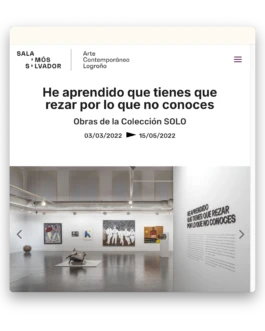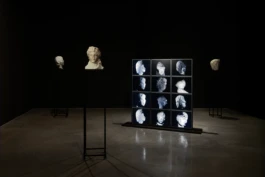
Initiated in 2017, ongoing.
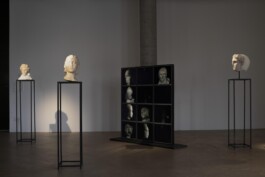
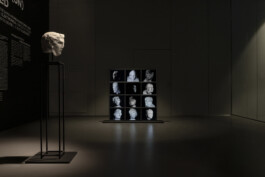
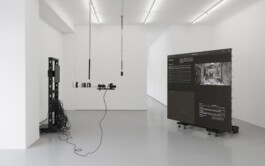
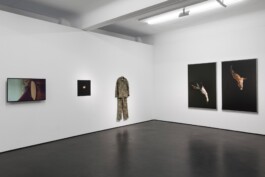
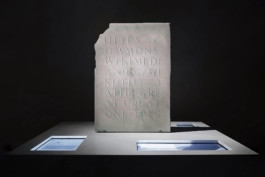
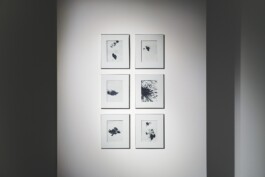
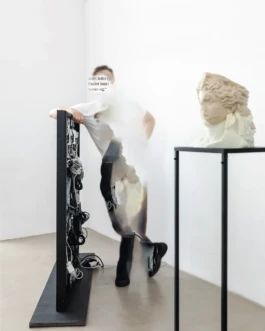
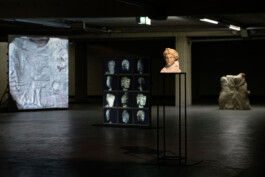
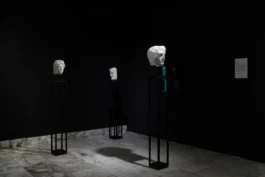
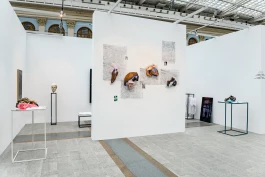
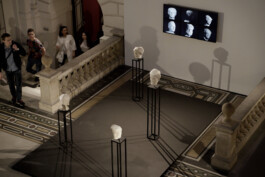
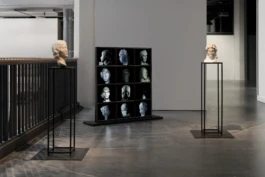
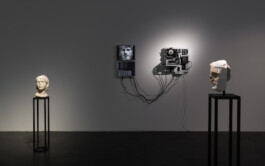
Marble, polyamide, machine learning algorithms, custom software, original dataset, multichannel video installation.
Machine learning research collaborator: Artem Konevskikh.


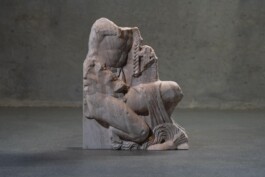
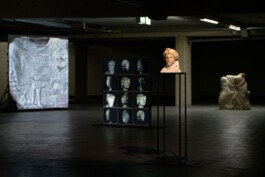
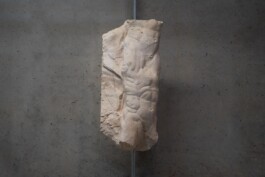
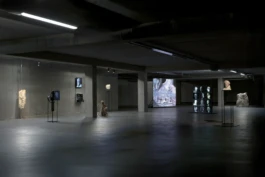
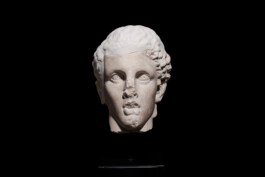
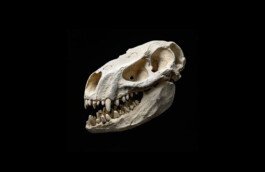
The series comprises sculptures, video installations, texts and a film essay that inquire into reverse archaeology via AI models and datasets of 3D scans of documents relating to cultural and natural history. Aimed at reconstructing missing fragments within sculptures of classical antiquity, fossils and other paleontological and cultural objects, the computational knowledge models are exercised in speculative, object-oriented historicism through derived, never-before-existent yet algorithmically 'accurate' quasi-documents of synthetic histories.
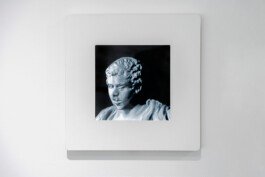
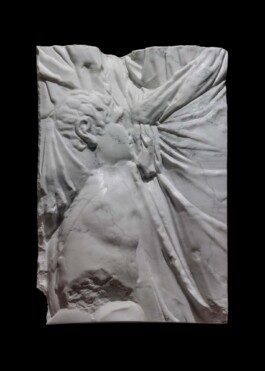
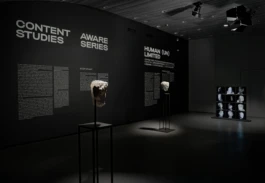
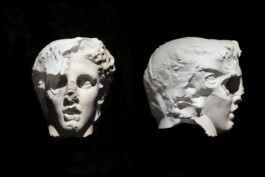
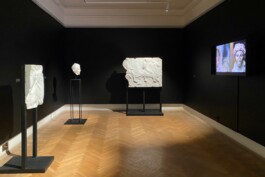
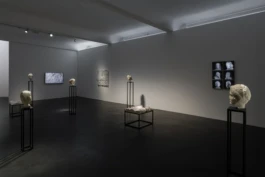
Content Aware Studies series inquires into the aesthetic, philosophical, and historiographical outcomes of computational and particularly in relation to modern generative AI models, reconstruction and generative reinterpretation of the objects of art of classical antiquity and in particular to fill the voids of the missing fragments. The automated algorithmic training is performed on the manually assembled dataset over thousands of 3D scans of friezes and sculptures of the era. The series concerns the prospects of methods involving data, ML, AI, and other computational automations turning into semi- and quasi-archeological knowledge productions when performed to augment historical and cultural studies in the era of ubiquitous planetary-scale computation. Some of these algorithmic outputs are then turned into new machine-fabricated sculptures uncanny in their algorithmic integrity. They render the work of synthetic agency that lends faithful authenticity to the forms, while also producing eerie errors and algorithmically bizarre normalisations of forms previously standardised and regulated by the canon of Hellenistic and Roman art. These speculative forms of restoration, museology, and historiography provide a case study for critical examination of possibly misleading trajectories of algorithmically augmented research and knowledge production, poisoned by epistemic focal biases occurring at the level of software architecture of radical complexity. Preoccupied with biases, misleading guises, quasi-authenticities, and mixed-up entanglements of material and informational domains, it seeks to examine epistemological issues. The series questions: what epistemics do such methodologies hold by uncovering deeper and sharply unsuspected new knowledge or instead masking unacknowledged biases? In the optics of a non-human agency of the AI-investigator, what of our historical knowledge and interpretation encoded into the datasets will survive this digital digestion? How are historical narratives, documents, their meaning, and function perverted when their analysis has been outsourced to machine vision and cognition? What changes can we anticipate in historical knowledge and documentation during the era of the information overproduction epidemic and generative reality modeling?
Hashterms
A form of parahistorical investigative practice in which gaps in our knowledge of the past are studied and filled in using machine learning and generative AI techniques involving historical archive datasets.
Historical findings and narratives resulting from reverse archaeology and other algorithmic methodologies.
A speculative concept describing an emergent aesthetic system that arises from autonomous processes rather than from direct human intention. The term combines auto- (self, autonomous) with aesthetics, suggesting forms of perception, judgment, or sensibility generated by machines, algorithms, or self-organizing systems.
Refers to the architecture of the entangled cognitive infrastructures involving algorithms and the software designs of AI models, automated data streams, and the core platforms and libraries for machine learning, as well as the hardware on which they operate, i.e. data centres, submarine cable networks, and GPU chip designs, etc.
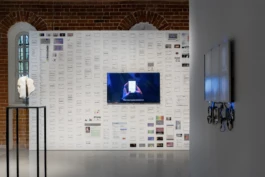
Content Aware Studies (CAS) series is comprised of a vast amount of data, AI experiments, objects, moving image works, films and essays. It inquires how the use of machine learning in historical analysis and reproduction as a scientific tool brings to the forefront ethical questions of bias contamination within data and automation of its analysis. Inspired by examples of confusing para-scientific interventions such as AI-based Voynich Manuscript decryptions, the CAS series examines the various sides of this inquiry. It also speculates about material objects as synthetic documents of machine-rendered histories.
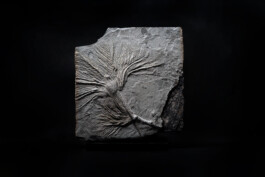

These speculative forms of restoration, museology and historiography mean to provide a case study for critical examination of misleading trajectories in knowledge production and epistemic focal biases that occur at the level of radically complex software architectures. Preoccupied with biases, misleading guises, quasi-authenticities, and mixed-up entanglements of material and informational domains, it seeks to examine epistemological issues of computationally augmented studies. The series questions: what epistemics do such methodologies hold by uncovering deeper and sharply unsuspected new knowledge or instead masking unacknowledged biases?
A series of essays addresses these experiments via the new materialist, non-anthropocentric, media-archaeological, object-oriented ontological, and speculative philosophy frameworks, while seeking to locate the subjects of investigation as encounters between non-organic bodies. In the optics of a non-human agency of the AI-investigator, what of our historical knowledge and interpretation encoded into the datasets will survive this digital digestion? How are historical narratives, documents, their meaning, and function perverted when their analysis has been outsourced to machine vision and cognition? What changes can we anticipate in historical knowledge and documentation during the era of the information overproduction epidemic and generative reality modeling?
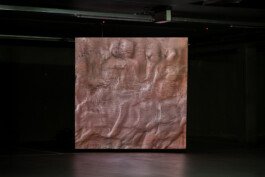
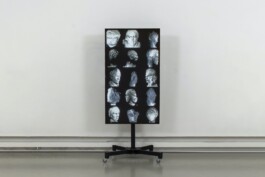
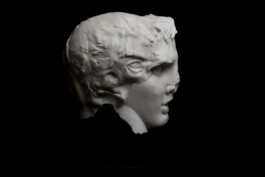
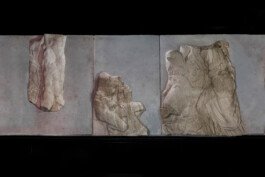
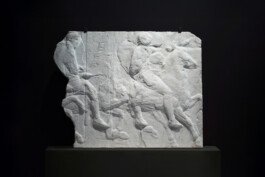
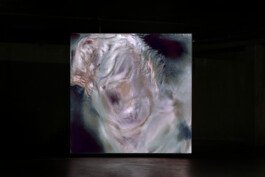
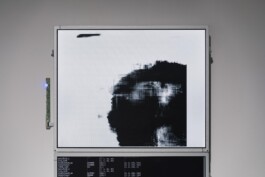
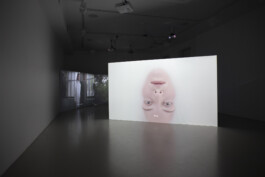
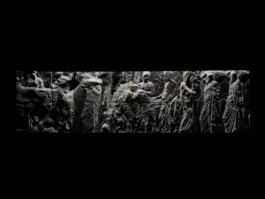
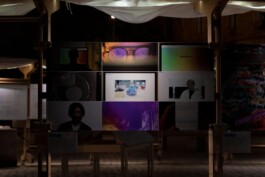
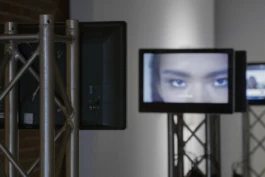
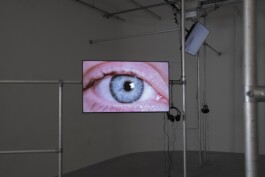
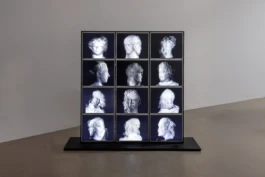
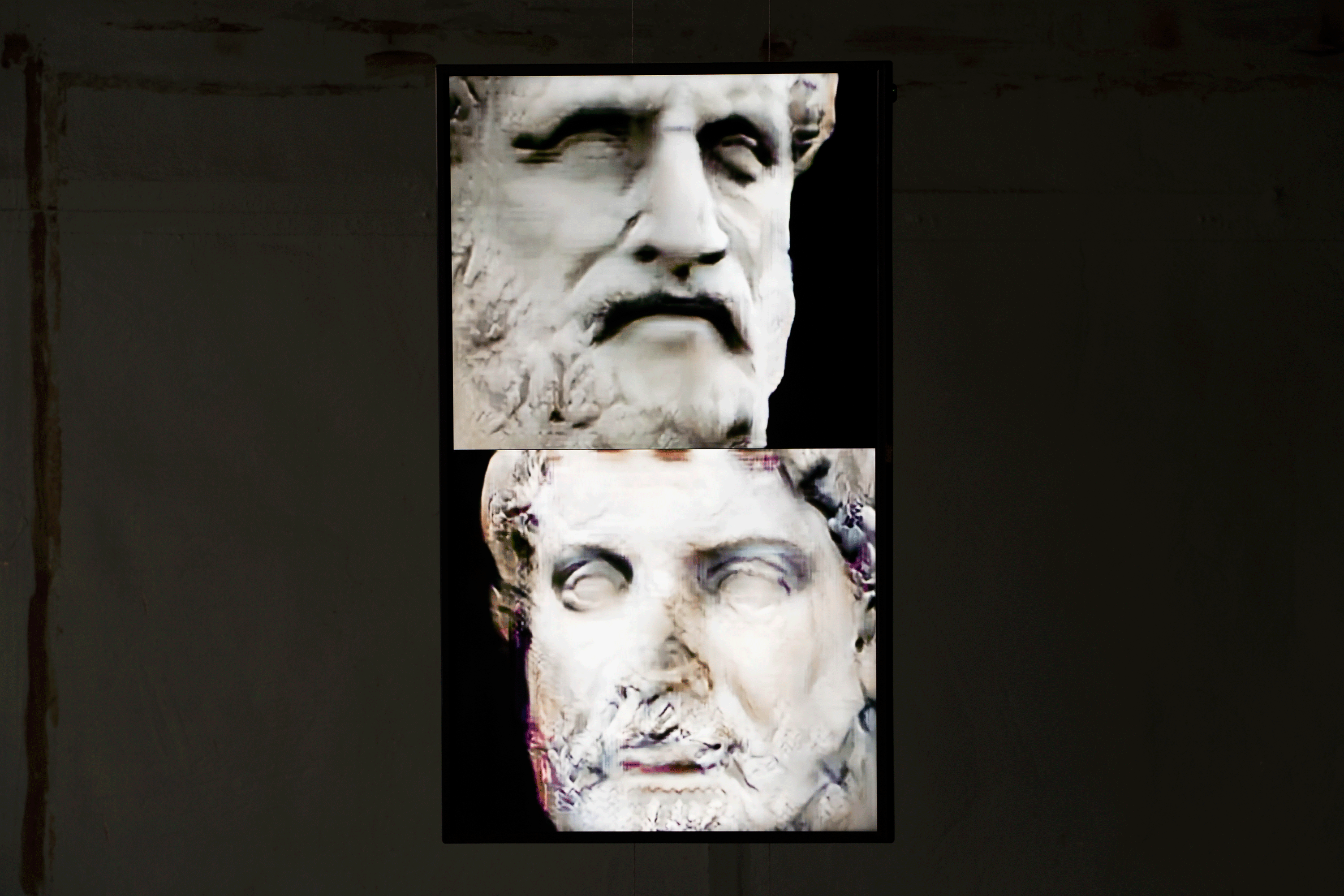
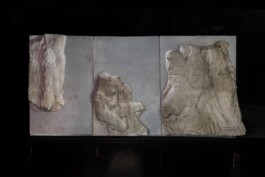
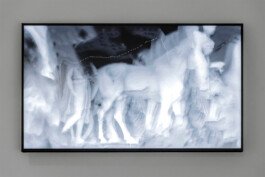
CAS 0V6 Parthenon Frieze Misconstructed is an 8-channel 8K video work created using a specialised Parthenon Frieze Dataset as part of the Content Aware Studies research series. The work investigates how algorithmic systems interpret, fragment, and reconstruct cultural heritage, revealing the procedural and operational nature of algorithmic agency¹.
The source material is the Parthenon frieze - a continuous sculptural relief depicting the Panathenaic procession in marble². The algorithms analyse thousands of digital fragments, detecting structural and compositional patterns, and generate generative reconstructions in which the sequence of figures, gestures, and forms is reinterpreted and transformed.
From the perspective of media archaeology (Kittler, Ernst), the work does not document “historical reality” but makes visible the technical operations of processing cultural archives and machine time³. Following Flusser’s theory of technical images, the video demonstrates the frieze as a surface on which the apparatus’ logic manifests itself⁴: the algorithm does not mirror human perception but produces visual and structural meaning autonomously.
In line with Luciana Parisi’s concept of algorithmic thought, the system generates forms that are neither reconstructions nor errors but speculative epistemic propositions, arising from probabilistic structures and data excess. The video captures the real-time evolution of these forms, revealing the interplay between archival memory, fragmentarity, and computational inference.
Thus, Parthenon Frieze Misconstructions functions as a critical tool, highlighting the limitations of human interpretation, the operational logic of algorithms, and the transformation of historical knowledge in the age of artificial intelligence.
1.Kittler, Friedrich A. Optical Media: Berlin Lectures 1999. Cambridge: Polity Press, 2010.
2. Parthenon Frieze, a continuous sculptural band depicting the Panathenaic procession; surviving blocks are held in the British Museum and the Acropolis Museum. (en.wikipedia.org)
3. Ernst, Wolfgang. Digital Memory and the Archive. Minneapolis: University of Minnesota Press, 2013.
4. Flusser, Vilém. Into the Universe of Technical Images. Minneapolis: University of Minnesota Press, 2011.
5. Parisi, Luciana. “Algorithmic Thought: Computation as Critique.” In The Technological Condition, 2015.
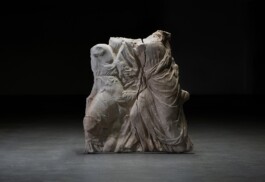
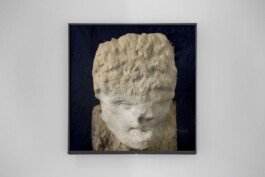
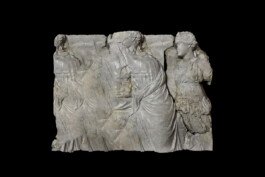
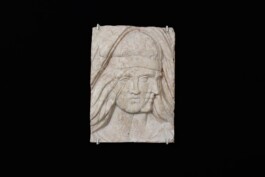
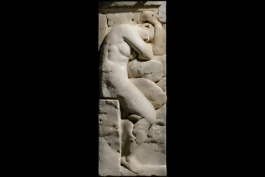
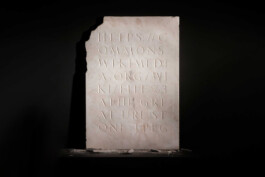
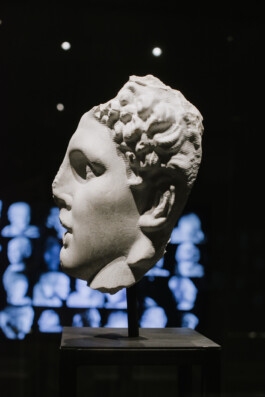
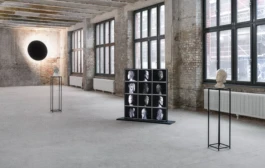
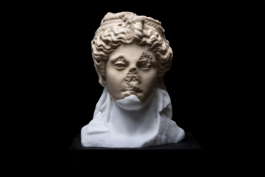
The objects from the initial iteration of the CAS series came through methodologies developed with data scientists and based on training artificial neural networks aiming to replenish lost fragments of sculptures, friezes and other objects of classical antiquity as well as to generate never-before-existing, yet algorithmically genuine, objects of that era. The research examined outputs of advanced AI models trained on datasets consisting of thousands of 3D scans of classical sculptures from renowned international museum collections. The models generated by the algorithm were then 3D-printed in various synthetic materials, filling the voids in eroded and damaged marble sculptures. Some of these algorithmic outputs were turned into entirely new marble sculptures carved by machines. Uncanny in their algorithmic integrity, they posed questions about whether they can be considered objects of classical antiquity. They render the work of a synthetic agency that lends faithful authenticity to the forms, while also producing bizarre errors and algorithmic normalizations of forms previously standardized and regulated by the canon of Hellenistic and Roman art.
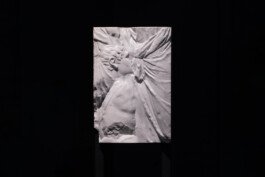
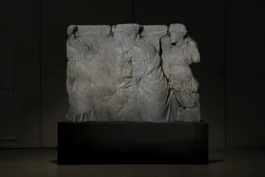
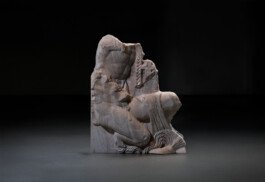
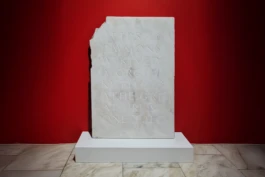
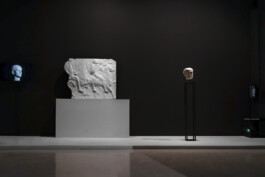
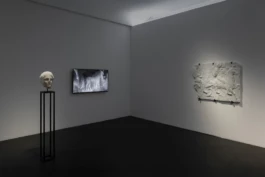
This work is generated from a real-world dataset consisting of high-resolution digital scans and photographic documentation of the Pergamon Altar reliefs. Originally created in the 2nd century BCE, the altar’s sculptural friezes depict the Gigantomachy - a monumental narrative of cosmic struggle between gods and giants - fragments of which have survived through excavation, displacement, and museum reconstruction.
Machine-learning models trained on these fragmented reliefs analyse stylistic, anatomical, and compositional patterns embedded in the historical material. From this data, the system generates speculative continuations of missing or damaged forms. These algorithmic inferences are then translated into a marble sculpture, materialising a version of the altar shaped not by archaeological consensus, but by statistical reasoning.
Rather than restoring the past, CAS 04 Parthenon South XI 31 exposes the instability of historical narratives when cultural heritage is processed as data. The work positions the algorithm as a contemporary myth-making agent, producing a new fragment that reflects both the violence of historical loss and the interpretive logic of machine intelligence.
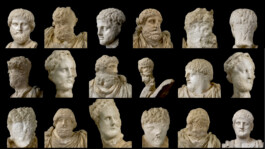
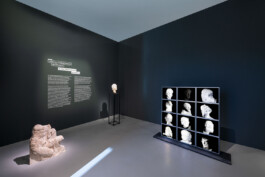
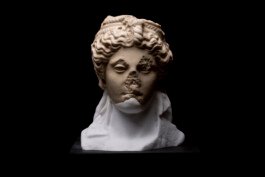
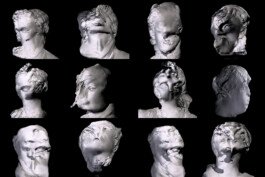
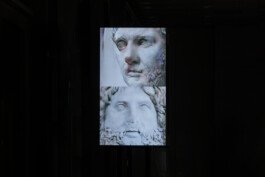
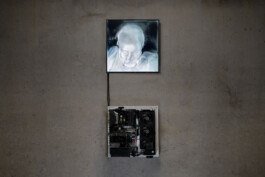
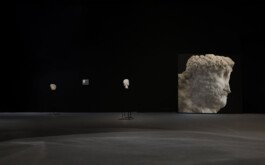
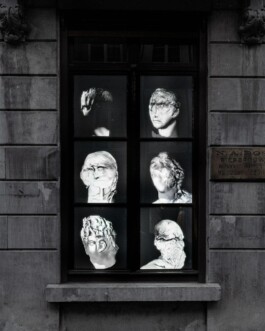
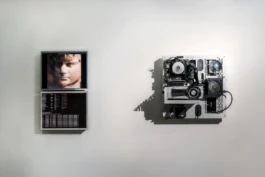
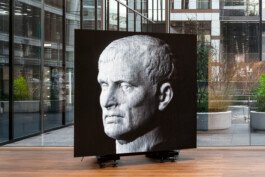
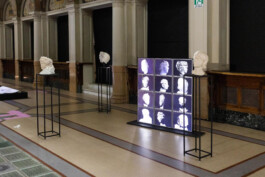
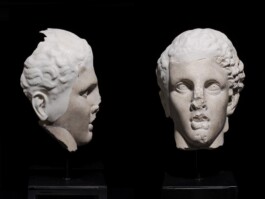
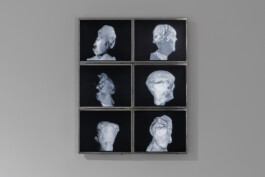
The CAS Portrait Series examines, initiated in 2018, portraiture as a shifting technical regime in which the human face functions less as representation than as an operational surface for inscription. Generated from real-world datasets of digitised ancient sculptural portraits—primarily fragmented Hellenistic and Roman heads - the series situates classical sculpture within a longue durée of media systems that encode, transmit, and regulate cultural memory¹.
Following Friedrich Kittler, these ancient portraits are approached not as expressions of subjectivity but as material outputs of specific inscription technologies—stone, tools, workshops, and institutional frameworks¹. Their contemporary digitisation marks a further epistemic shift: sculptural matter is translated into discrete data structures, entering what Wolfgang Ernst defines as a time-critical media regime, where historical objects are processed outside narrative continuity and reconstituted through operational machine time¹.
Against this media-archaeological determinism, the series introduces a set of theoretical counterpoints. Vilém Flusser’s notion of technical images as apparatus-generated abstractions becomes central here: the algorithmic portraits are not images of faces but visualisations of a program, surfaces where the logic of the apparatus manifests itself². The portrait ceases to be a mirror of the human and instead reveals the conditions under which visibility itself is produced².
Luciana Parisi’s concept of algorithmic thought further destabilises human-centered interpretation³. In this framework, the machine does not merely execute predefined instructions but generates synthetic futures through speculative computation. The portraits emerge as expressions of an algorithmic rationality that exceeds human intention, producing forms that are neither errors nor reconstructions, but anticipatory propositions shaped by probability and excess³.
Yuk Hui’s theory of technics and cosmotechnics reframes the dataset as a culturally and historically situated system rather than a universal abstraction⁴. The ancient archive, filtered through modern digitization and machine learning, embodies a collision of cosmologies: classical anthropomorphic order is reprocessed through contemporary computational epistemologies⁴. The resulting portraits thus register a discontinuity between cultural worlds, revealing how technological systems carry implicit ontologies of time, form, and identity⁴.
Within this theoretical constellation, the CAS Portrait Series positions portraiture as a site where anthropocentric memory collapses into mechanic operation. The face persists, but only as a residual effect of technical processes that no longer serve commemoration or representation. What remains is a post-anthropocentric artifact - one that exposes how cultural heritage is continuously re-authored by the epistemic frameworks of its mediating technologies¹–⁴.
1. Parikka, Jussi. What Is Media Archaeology? Cambridge: Polity Press, 2012.
2. Flusser, Vilém. Post-History. Minneapolis: University of Minnesota Press, 2013.
3. Parisi, Luciana. “Algorithmic Thought: Computation as Critique.” In The Technological Condition, edited collection, 2015.
4. Hui, Yuk. Art and Cosmotechnics. Minneapolis: University of Minnesota Press / e-flux, 2021.
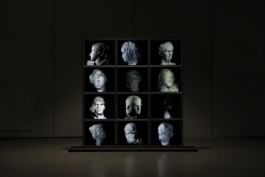
The CAS Portrait Series examines, initiated in 2018, portraiture as a shifting technical regime in which the human face functions less as representation than as an operational surface for inscription. Generated from real-world datasets of digitised ancient sculptural portraits—primarily fragmented Hellenistic and Roman heads - the series situates classical sculpture within a longue durée of media systems that encode, transmit, and regulate cultural memory¹.
Following Friedrich Kittler, these ancient portraits are approached not as expressions of subjectivity but as material outputs of specific inscription technologies—stone, tools, workshops, and institutional frameworks¹. Their contemporary digitisation marks a further epistemic shift: sculptural matter is translated into discrete data structures, entering what Wolfgang Ernst defines as a time-critical media regime, where historical objects are processed outside narrative continuity and reconstituted through operational machine time¹.
Against this media-archaeological determinism, the series introduces a set of theoretical counterpoints. Vilém Flusser’s notion of technical images as apparatus-generated abstractions becomes central here: the algorithmic portraits are not images of faces but visualisations of a program, surfaces where the logic of the apparatus manifests itself². The portrait ceases to be a mirror of the human and instead reveals the conditions under which visibility itself is produced².
Luciana Parisi’s concept of algorithmic thought further destabilises human-centered interpretation³. In this framework, the machine does not merely execute predefined instructions but generates synthetic futures through speculative computation. The portraits emerge as expressions of an algorithmic rationality that exceeds human intention, producing forms that are neither errors nor reconstructions, but anticipatory propositions shaped by probability and excess³.
Yuk Hui’s theory of technics and cosmotechnics reframes the dataset as a culturally and historically situated system rather than a universal abstraction⁴. The ancient archive, filtered through modern digitization and machine learning, embodies a collision of cosmologies: classical anthropomorphic order is reprocessed through contemporary computational epistemologies⁴. The resulting portraits thus register a discontinuity between cultural worlds, revealing how technological systems carry implicit ontologies of time, form, and identity⁴.
Within this theoretical constellation, the CAS Portrait Series positions portraiture as a site where anthropocentric memory collapses into mechanic operation. The face persists, but only as a residual effect of technical processes that no longer serve commemoration or representation. What remains is a post-anthropocentric artifact - one that exposes how cultural heritage is continuously re-authored by the epistemic frameworks of its mediating technologies¹–⁴.
1. Parikka, Jussi. What Is Media Archaeology? Cambridge: Polity Press, 2012.
2. Flusser, Vilém. Post-History. Minneapolis: University of Minnesota Press, 2013.
3. Parisi, Luciana. “Algorithmic Thought: Computation as Critique.” In The Technological Condition, edited collection, 2015.
4. Hui, Yuk. Art and Cosmotechnics. Minneapolis: University of Minnesota Press / e-flux, 2021.
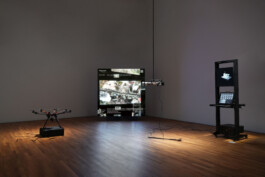
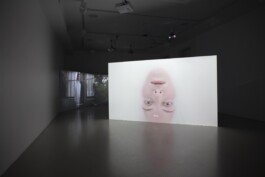
The CAS Generative Video Series constitutes a set of algorithmically mediated visual investigations derived from sculptural datasets. Each video documents a continuously evolving computational process in which machine-learning systems interpret historical forms - comprising 3D scans, surface textures, and fragmentary data - and generate dynamic, real-time visual outputs.
Rather than producing static reproductions, the series foregrounds process over product, emphasising the procedural and temporal nature of algorithmic agency. In this framework, the videos enact a negotiation between archival memory and generative speculation, exposing the ways in which computational systems operationalise historical datasets. The emergent forms thus occupy an interstitial space between historical reference, speculative reconstruction, and machinic materiality, making visible the temporalities, biases, and structural logics embedded within algorithmic interpretation.
By rendering algorithmic processes perceptible, the series invites a critical reflection on the role of artificial intelligence as a methodological and epistemic agent in cultural heritage studies, highlighting how computational systems can both reproduce and transform historical knowledge.
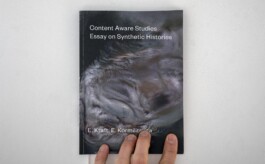
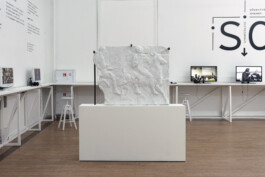
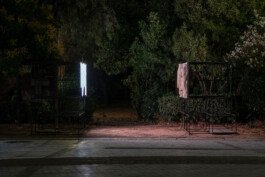
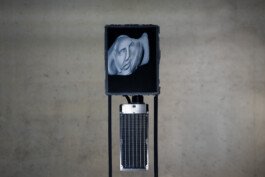
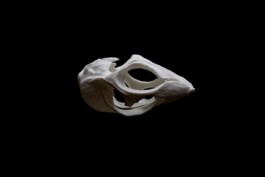
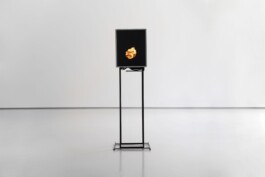
CAS 15V Stable Truncation investigates the material and epistemic thresholds of sculptural fragments, positioning incompleteness as a site of computational speculation. Generated from a real-world dataset of high-resolution 3D scans of partially preserved sculptures, the work captures forms that have been eroded, truncated, or lost over centuries.
Machine-learning models trained on this dataset analyze recurring structural and geometric patterns, producing algorithmically inferred continuations of missing shapes. These outputs are not historical reconstructions but autonomous suggestions generated by the system, revealing the latent forms and possibilities embedded within fragmentary cultural artifacts.
This video presents a real-time generative sculpture derived from the same process. The system continuously interprets input data: 3D scans of historical fragments, geometric forms, and surface textures - and generates dynamic, evolving shapes that respond to both computational inference and temporal conditions. The resulting sculpture occupies a space between archival fidelity and algorithmic imagination, materialising the tension between absence and presence, the historical and the computational, and the human and the machinic.
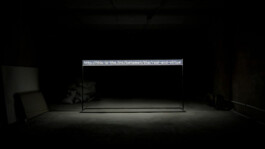
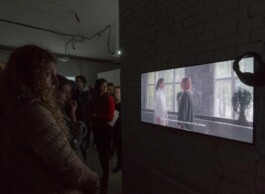
The film intends to open up speculations and thought experiments into history, matter, agency and computation. History in this context is seen as data; while data is seen as a crude material and critical resource for content-form-knowledge production through which production and investigation? questions of origin and genuine-ness are posed and aesthetic implications can be studied. How are historical narratives, documents, and their meaning and function perverted when they collide with ubiquitous machine vision and translation? In other words what happen to historical knowledge in the age of the information epidemic aforementioned and computational reality engineering? These questions are asked about synthetic forms of knowledge production as a result of outputs of machine-learning (ML)-technologies operating on historical archives. They inquire about the capacities and consequences of such machine-learning technologies as a means of automated historical investigation and question whether these findings still hold historical qualities.
One of the main questions about technology and culture, posed here is: what are the ethical, philosophical, and historical challenges we’re facing when using such automated means of production and investigation? Can applications of such technology allows us to uncover deeper and sharply unsuspected new knowledge or do they mask unacknowledged biases?
As part of this investigation, we look into the project Content Aware Studies (CAS), which through artistic practice seeks to establish investigative methods of these machine-learning-capacities. This research examines how various advanced AI, or more specifically General Adversarial - Networks (GANs), which are particularly known for their recent advancements in computer vision, cognition, and hyper-realistic image rendering operate when trained on datasets consisting of thousands of 3D scans from renowned international museum collections. Specifically trained neural network models are directed to replenish lost fragments of friezes and sculptures and thus generate previously never existing objects of classical antiquity. The algorithm generates results convertible into 3D models, which are then 3D-printed in synthetic materials and used to fill the voids of the original sculptures, or turned into entirely new machine-fabricated marble objects; Faithfully restoring original forms, while also producing bizarre errors and algorithmic interpretations of previously familiar to us Hellenistic and Roman art, which are then embodied in machine carved stone blocks. Uncanny in their algorithmic integrity they render the work of a synthetic agency that lends a faithful authenticity to the forms, while also producing bizarre errors and algorithmic normalisation of forms previously standardised and regulated by the canon of Hellenistic art.
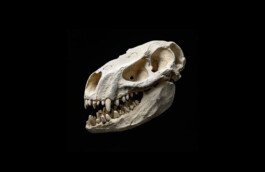
In its next iteration, constituting this proposal, the CAS series will shift towards challenging previously established AI methodologies against data from prehistoric and geologic time archives, including first stone tools, writing systems, paleontological archives of fossilised plants, organisms and other documents of natural history. It is expected to operate on datasets primarily comprised of findings archived and documented in natural history museum collections, from which the objects of fictional synthetic histories are to derive as a result. The techniques involved in the production of these objects are to include artificial maturation via newly established methods of sediment filtration, thus achieving 'synthetic' fossils not just visually, but also microscopically.

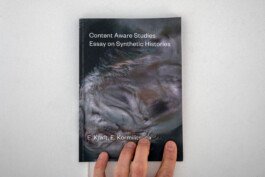
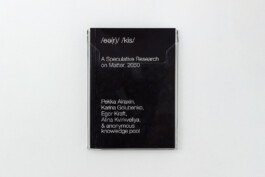
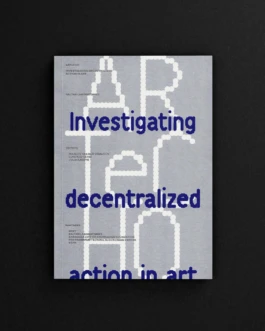
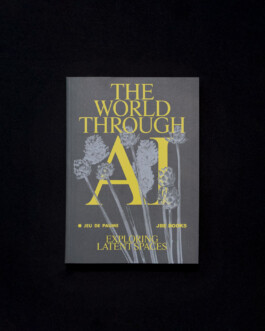
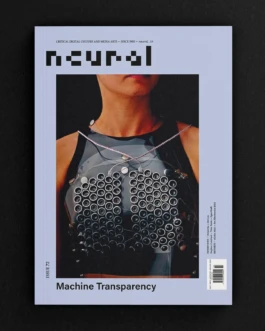
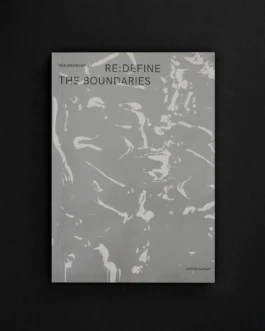
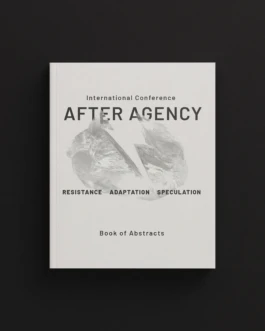
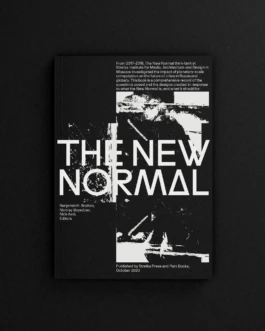
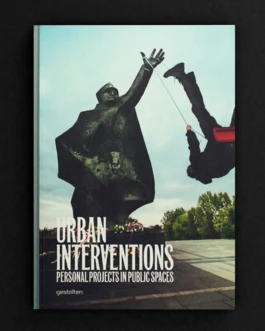
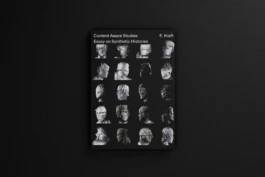
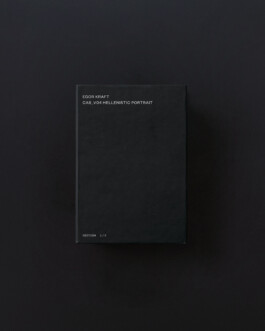
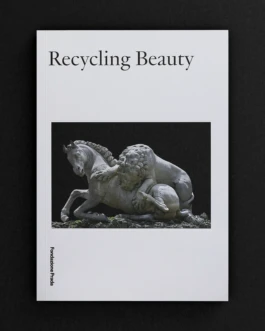
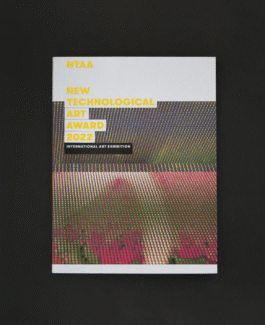
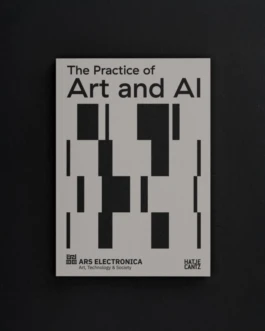
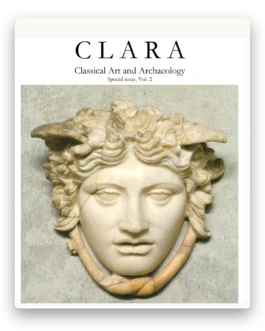
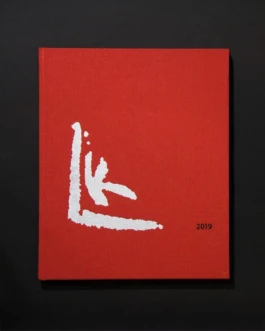
‘Museum of Synthetic Histories’ Essay Book Cover.
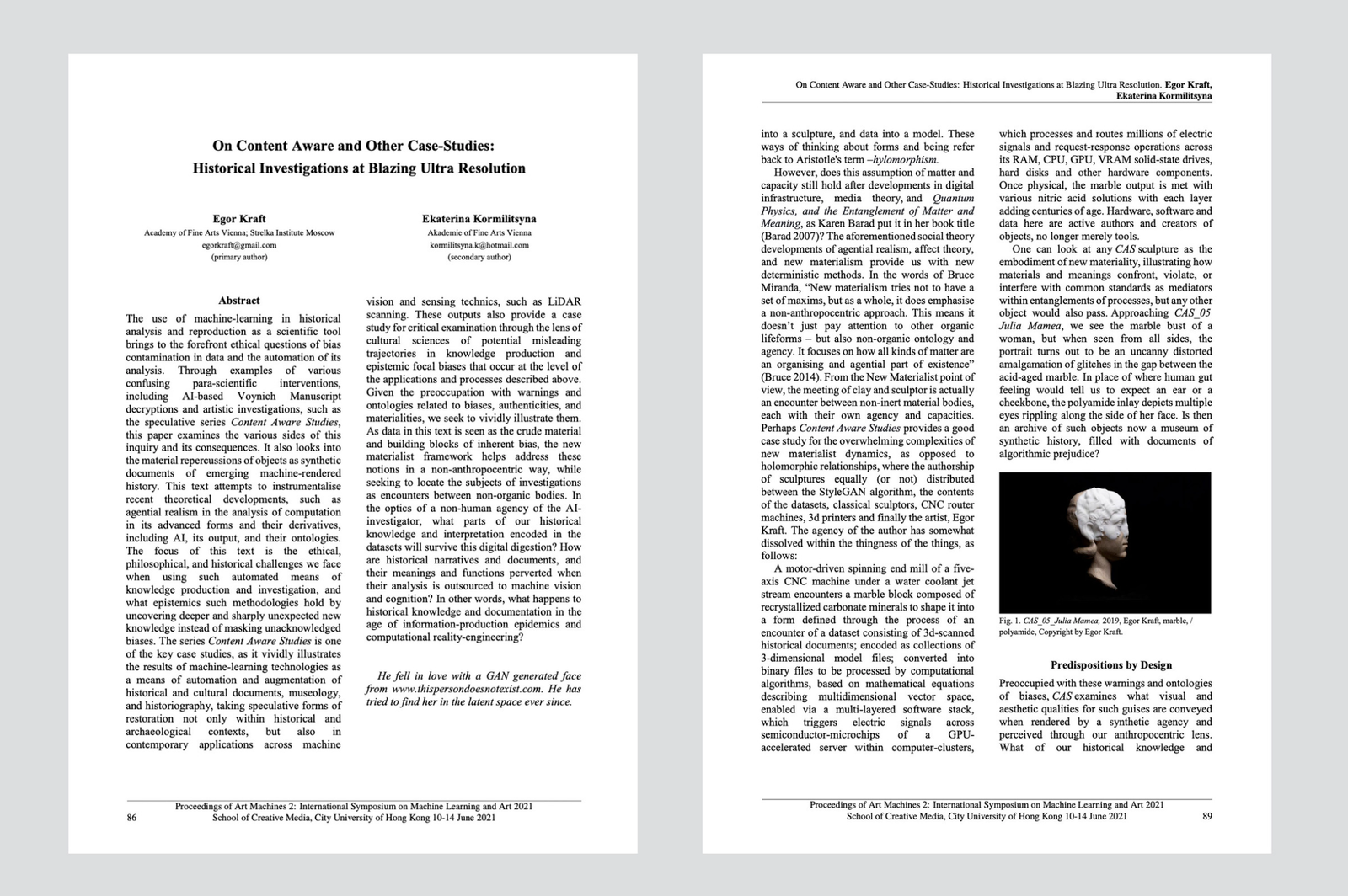
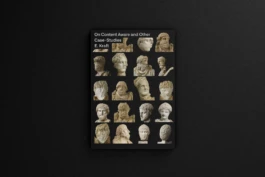
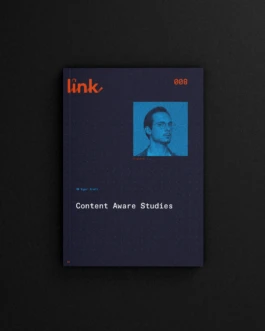
A series of essays on Synthetic Histories, Hylomorphism and Materiality, and Predispositions by Design in which the work Content Aware Studies is at the centre as a case study for the proposed critique of AI-driven methodology in historiography.
Links to downloadable PDFs:
2022 ‘Museum of Synthetic Histories’ - E. Kraft, E. Kormilitsyna | Published by BCS. Learning and Development Ltd. Proceedings of POM Conference, UDK Berlin 2021
2021 ‘On Content Aware and Other Case-Studies’ - E. Kraft, E. Kormilitsyna | Published by City University of Hong Kong, HKG
Initiated in 2017, ongoing.
Marble, polyamide, machine learning algorithms, custom software, original dataset, multichannel video installation.
Machine learning research collaborator: Artem Konevskikh.
The series comprises sculptures, video installations, texts and a film essay that inquire into reverse archaeology via AI models and datasets of 3D scans of documents relating to cultural and natural history. Aimed at reconstructing missing fragments within sculptures of classical antiquity, fossils and other paleontological and cultural objects, the computational knowledge models are exercised in speculative, object-oriented historicism through derived, never-before-existent yet algorithmically 'accurate' quasi-documents of synthetic histories.
Content Aware Studies series inquires into the aesthetic, philosophical, and historiographical outcomes of computational and particularly in relation to modern generative AI models, reconstruction and generative reinterpretation of the objects of art of classical antiquity and in particular to fill the voids of the missing fragments. The automated algorithmic training is performed on the manually assembled dataset over thousands of 3D scans of friezes and sculptures of the era. The series concerns the prospects of methods involving data, ML, AI, and other computational automations turning into semi- and quasi-archeological knowledge productions when performed to augment historical and cultural studies in the era of ubiquitous planetary-scale computation. Some of these algorithmic outputs are then turned into new machine-fabricated sculptures uncanny in their algorithmic integrity. They render the work of synthetic agency that lends faithful authenticity to the forms, while also producing eerie errors and algorithmically bizarre normalisations of forms previously standardised and regulated by the canon of Hellenistic and Roman art. These speculative forms of restoration, museology, and historiography provide a case study for critical examination of possibly misleading trajectories of algorithmically augmented research and knowledge production, poisoned by epistemic focal biases occurring at the level of software architecture of radical complexity. Preoccupied with biases, misleading guises, quasi-authenticities, and mixed-up entanglements of material and informational domains, it seeks to examine epistemological issues. The series questions: what epistemics do such methodologies hold by uncovering deeper and sharply unsuspected new knowledge or instead masking unacknowledged biases? In the optics of a non-human agency of the AI-investigator, what of our historical knowledge and interpretation encoded into the datasets will survive this digital digestion? How are historical narratives, documents, their meaning, and function perverted when their analysis has been outsourced to machine vision and cognition? What changes can we anticipate in historical knowledge and documentation during the era of the information overproduction epidemic and generative reality modeling?
The film intends to open up speculations and thought experiments into history, matter, agency and computation. History in this context is seen as data; while data is seen as a crude material and critical resource for content-form-knowledge production through which production and investigation? questions of origin and genuine-ness are posed and aesthetic implications can be studied. How are historical narratives, documents, and their meaning and function perverted when they collide with ubiquitous machine vision and translation? In other words what happen to historical knowledge in the age of the information epidemic aforementioned and computational reality engineering? These questions are asked about synthetic forms of knowledge production as a result of outputs of machine-learning (ML)-technologies operating on historical archives. They inquire about the capacities and consequences of such machine-learning technologies as a means of automated historical investigation and question whether these findings still hold historical qualities.
One of the main questions about technology and culture, posed here is: what are the ethical, philosophical, and historical challenges we’re facing when using such automated means of production and investigation? Can applications of such technology allows us to uncover deeper and sharply unsuspected new knowledge or do they mask unacknowledged biases?
As part of this investigation, we look into the project Content Aware Studies (CAS), which through artistic practice seeks to establish investigative methods of these machine-learning-capacities. This research examines how various advanced AI, or more specifically General Adversarial - Networks (GANs), which are particularly known for their recent advancements in computer vision, cognition, and hyper-realistic image rendering operate when trained on datasets consisting of thousands of 3D scans from renowned international museum collections. Specifically trained neural network models are directed to replenish lost fragments of friezes and sculptures and thus generate previously never existing objects of classical antiquity. The algorithm generates results convertible into 3D models, which are then 3D-printed in synthetic materials and used to fill the voids of the original sculptures, or turned into entirely new machine-fabricated marble objects; Faithfully restoring original forms, while also producing bizarre errors and algorithmic interpretations of previously familiar to us Hellenistic and Roman art, which are then embodied in machine carved stone blocks. Uncanny in their algorithmic integrity they render the work of a synthetic agency that lends a faithful authenticity to the forms, while also producing bizarre errors and algorithmic normalisation of forms previously standardised and regulated by the canon of Hellenistic art.
A series of essays on Synthetic Histories, Hylomorphism and Materiality, and Predispositions by Design in which the work Content Aware Studies is at the centre as a case study for the proposed critique of AI-driven methodology in historiography.
Links to downloadable PDFs:
2022 ‘Museum of Synthetic Histories’ - E. Kraft, E. Kormilitsyna | Published by BCS. Learning and Development Ltd. Proceedings of POM Conference, UDK Berlin 2021
2021 ‘On Content Aware and Other Case-Studies’ - E. Kraft, E. Kormilitsyna | Published by City University of Hong Kong, HKG

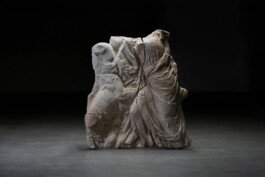
‘Museum of Synthetic Histories’ Essay Book Cover.
Ikejiri, Setagaya, Tokyo, Japan
Neubau, Vienna, Austria
E. G. Kraft – artist-researcher, founder
Anna Kraft – researcher, director
Ikejiri, Setagaya, Tokyo, Japan
Neubau, Vienna, Austria
mail[at]kraft.studio
E. G. Kraft – artist-researcher, founder
Anna Kraft – researcher, director
Content Aware Studies, 2017-2025
The New Color, 2011-2018
1 & ∞ ⑁ One & Infinite Chairs, 2023
Hashd0x. Proof of War, 2022
Decentralised Embargo, 2022
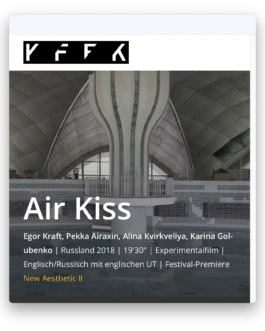
Ais Kiss, 2017
Chinese Ink, 2018
PropaGAN, 2022
URL Stone, 2015
The Link, 2015
Twelve Nodes, 2019
Scatterchive
I Print, Therefore I Am, 2014
Kickback, 2014
Unfolding, 2011
The Moment, The Past, 2014


Site Index